
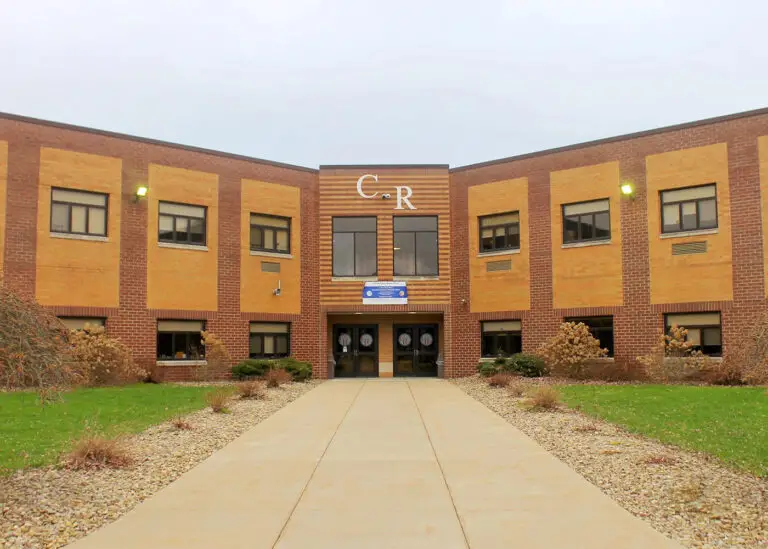
The proposed 2026–27 budget for Cuba-Rushford Central School District asks taxpayers to absorb a double-digit increase while teaching positions are cut, administrative compensation rises, and district leadership celebrates expanded amenities, technology access, and mental health staffing.
Meanwhile, the district’s academic foundation appears dangerously unstable.
According to New York State assessment reporting and district-linked data aggregators, Cuba-Rushford students in grades 3–8 have struggled to consistently exceed roughly 50% proficiency in core academic subjects, including English Language Arts and mathematics.
That number matters.
It means that in many classrooms, nearly half of the students are not meeting state proficiency standards in reading and math, the very skills upon which all future education depends.
Yet the district conversation increasingly revolves around everything except academics.
Technology initiatives. Expanded support staffing. Additional programming. New amenities. Administrative restructuring. Future merger positioning.
These may all have value. But they are not substitutes for literacy and numeracy.
Parents and taxpayers should ask a simple question: If children cannot read, write, compute, and reason at grade level, what exactly are we funding?
Rural New York Is Already Facing a Crisis
This is not happening in isolation. Across rural New York, districts with shrinking enrollment and rising operational costs are entering a dangerous cycle:
- declining academics,
- increasing taxes,
- growing administrative layers,
- teacher reductions,
- and loss of public trust.
New York State itself reports overall statewide proficiency averages in grades 3–8 hovering near the mid-50% range in ELA and math.
For a small rural district, merely performing “around the state average” is not enough to ensure long-term survival. Families with means increasingly leave districts they perceive as unstable academically. Homeschooling, private alternatives, BOCES pathways, and neighboring districts become more attractive every year. My family is one among many who have chosen this path; however, all children are the future, and none of the students enrolled in CRCS should be left behind.
Once enrollment declines accelerate, the consequences compound:
- fewer students,
- less state aid stability,
- fewer teachers,
- larger class combinations,
- heavier dependence on technology-based instruction,
- and greater consolidation pressure.
The result is often a district that survives administratively while weakening educationally.
The Wrong Incentives
Taxpayers are being told that painful increases are necessary because state-mandated mergers may eventually come. That argument deserves scrutiny.
Historically, institutions facing consolidation pressure often attempt to preserve administrative structures for as long as possible. In higher education, many New Yorkers watched this unfold during the SUNY restructuring debates of 2021–2022, when bureaucratic preservation frequently appeared to outrank transparency or educational outcomes. I sat on the Faculty Senate as the representative for the Department of Geology during this time; I am hearing the same line items and justifications. Egregious statistics and smoothed over justifications.
School districts can fall into the same trap:
- Protect the institution first,
- Protect leadership second,
- Protect classroom instruction last.
If teaching lines disappear while administrative compensation grows, the public notices. And the public should notice and care deeply. The order listed above, if the children are of greatest concern, is completely out of order.
Mental Health Matters — But So Does Competence
No reasonable person opposes mental health support for students. But schools exist first to educate.
A child who graduates unable to read proficiently, write coherently, or perform basic mathematics faces lifelong consequences:
- reduced earning potential,
- increased remediation,
- weaker workforce readiness,
- and diminished civic participation.
Academic failure itself becomes a mental health issue. When districts celebrate peripheral expansions while foundational academic performance stagnates, priorities have become inverted.
Technology access is valuable.
Counseling is valuable.
Amenities are valuable.
But none of them replace a skilled teacher teaching reading, writing, science, and mathematics effectively.
What Happens Next?
If current patterns continue, Cuba-Rushford likely faces one of three futures over the next decade:
- Continued instructional decline paired with administrative survival through regionalization and shared services;
- Eventual merger or functional consolidation with neighboring districts;
- Community-driven reform that refocuses the district on measurable academic achievement, transparent budgeting, and classroom-centered investment.
Only the third path preserves long-term community confidence.
But it requires something increasingly rare in public institutions: accountability. Not slogans. Not branding. Not celebratory press releases. Not expensive initiatives disconnected from outcomes.
Results.
Because taxpayers can tolerate sacrifice when they see improvement.
What they will not tolerate indefinitely is paying more every year while core educational performance remains weak and classroom positions disappear. That is not an investment. That is managed decline. Should this budget pass, every single property owner in the CRCS district faces an estimated 10.4% increase in school taxes… this year alone.
Sources and Data
- New York State Grades 3–8 Assessment Data
- Cuba-Rushford District Report Card Data
- Cuba-Rushford Academic Profile Overview
- NY State Assessment Archives
- NY Charter School Association Test Score Dashboard
This article is a community submission from Dr. Kimberly Meehan. It has been edited for publication. The views expressed in this submission are solely those of the author and do not necessarily reflect the opinions of the publishing outlet.